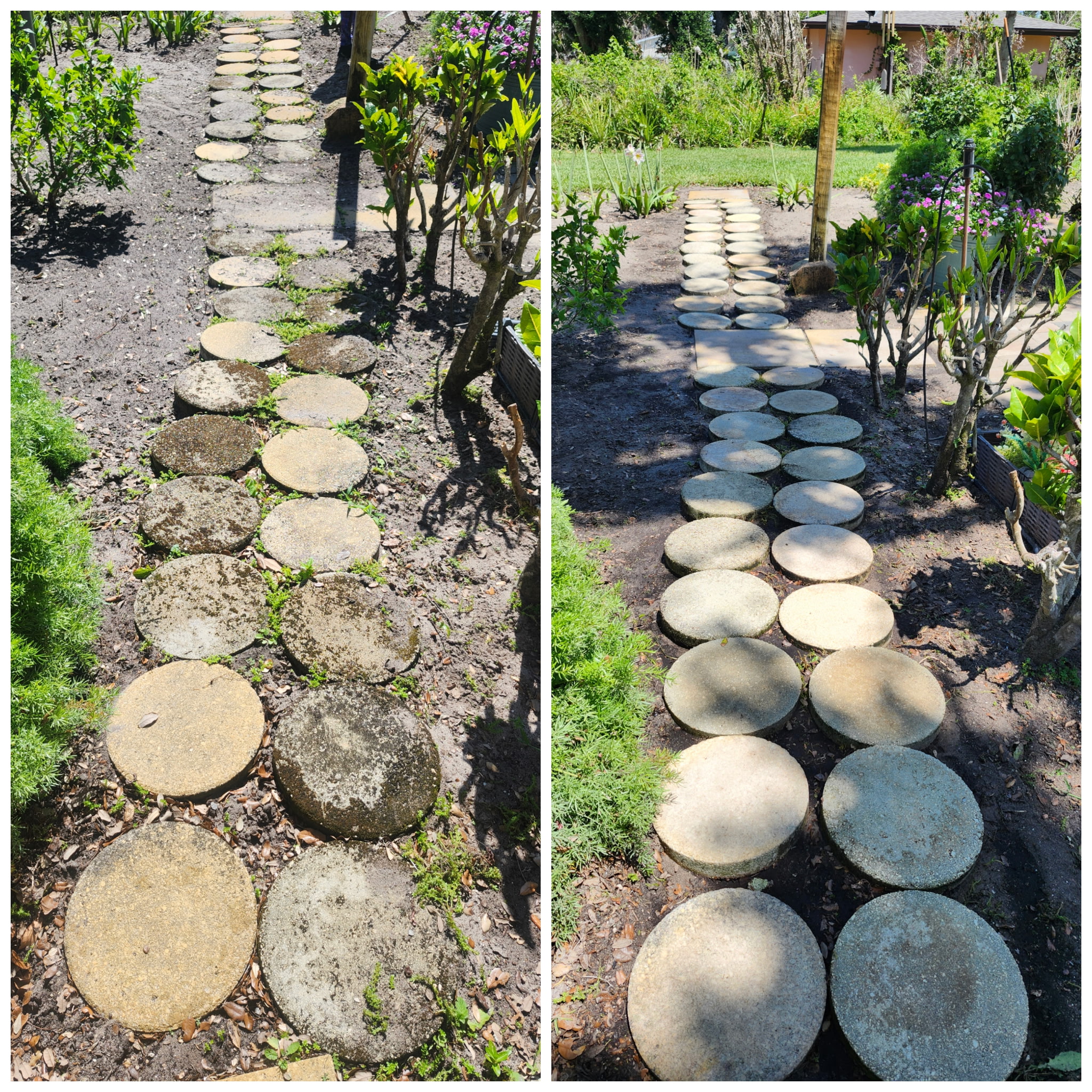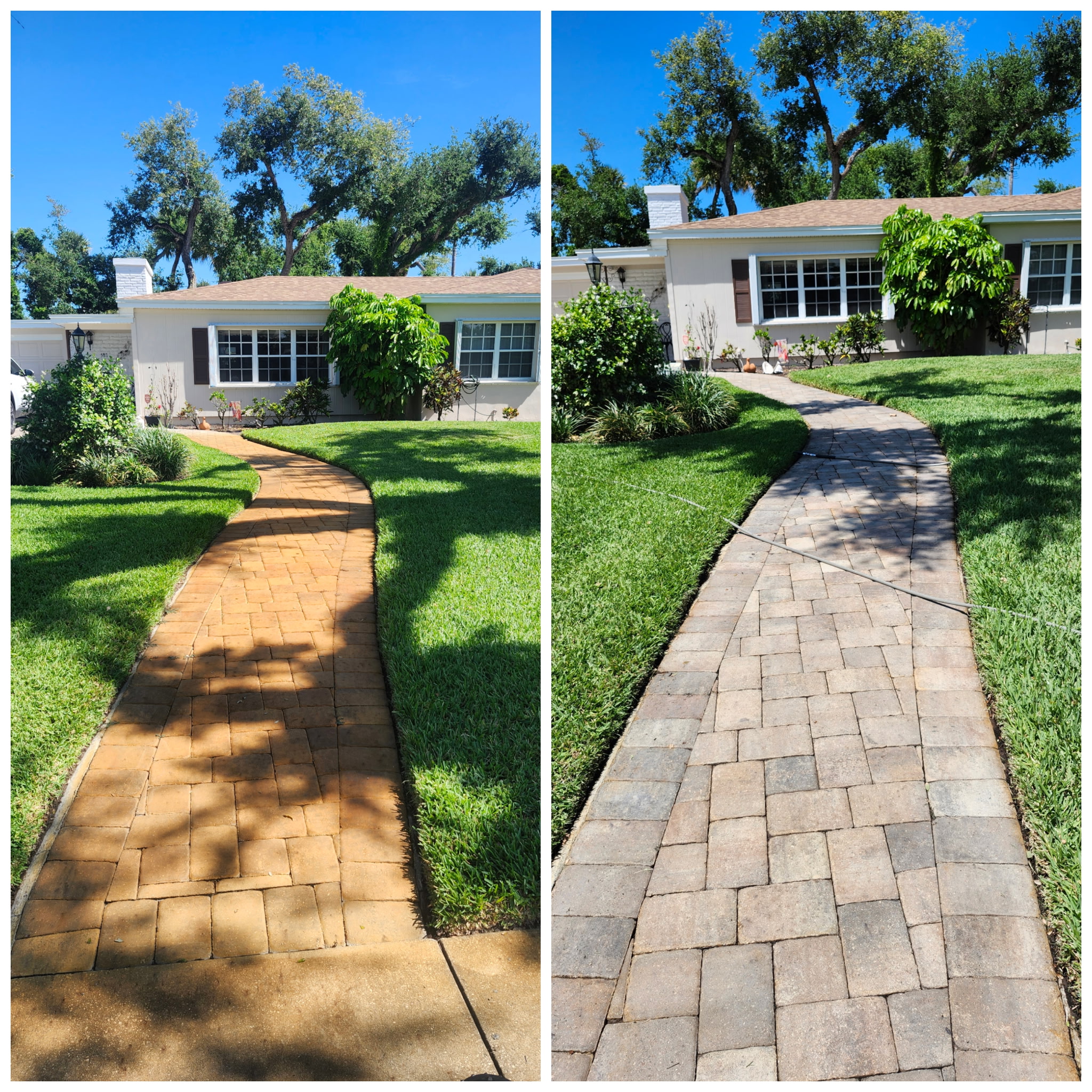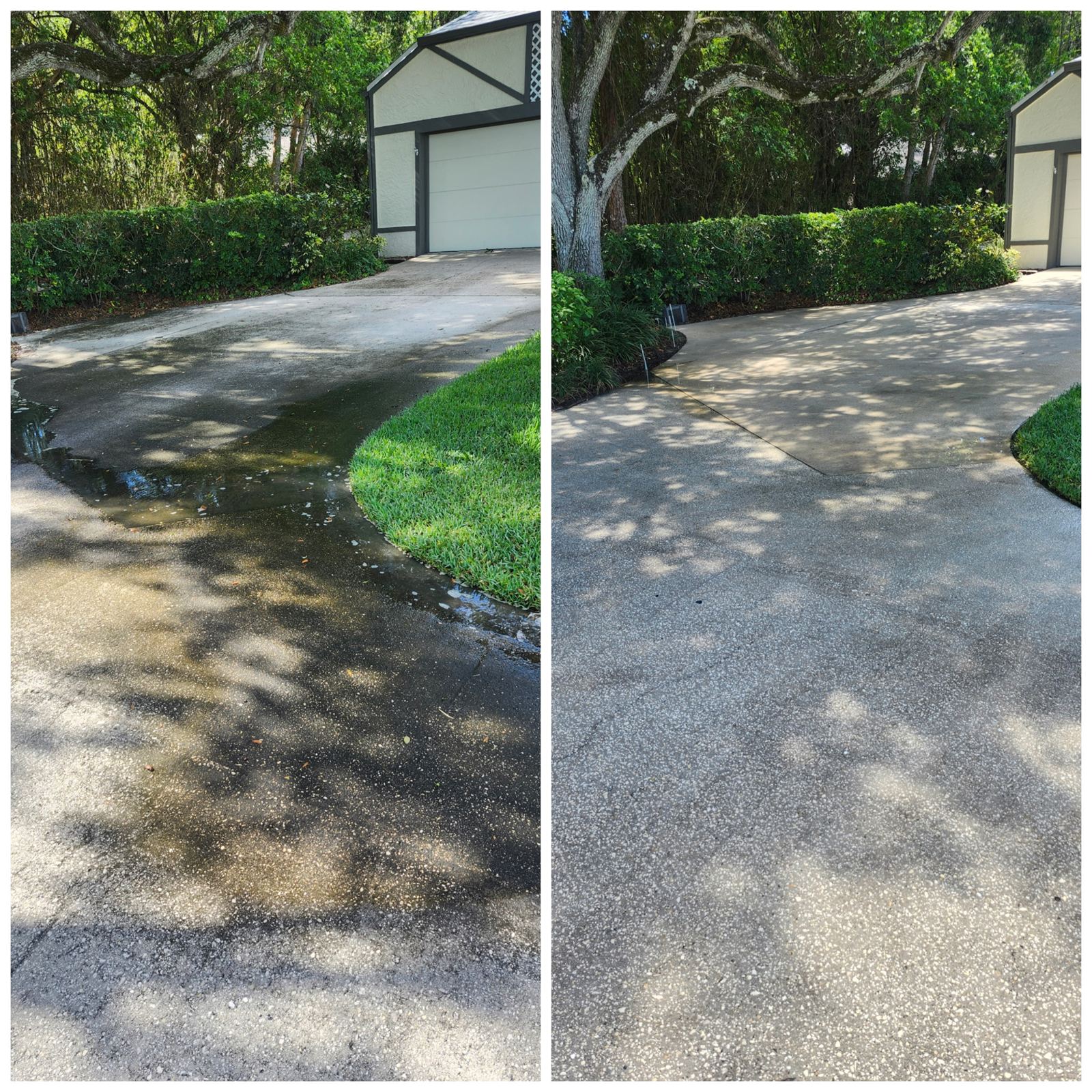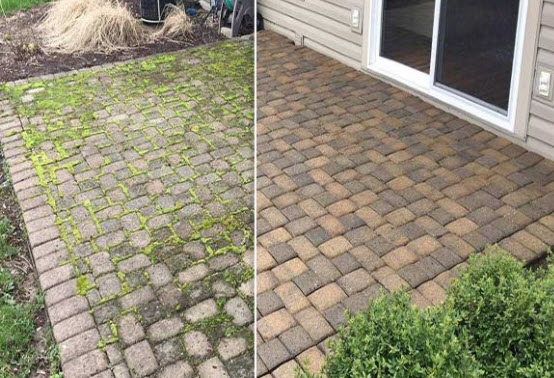
The right way to clean pavers in Florida is to pre-treat for algae, clean with a flat surface cleaner at low, controlled pressure, then re-sand the joints and seal the surface. Pavers are more delicate than concrete, so the goal is even cleaning without blasting out the sand that holds them together.
Why pavers need a gentler approach
Interlocking pavers rely on sand-filled joints for stability. Hit them with a high-pressure wand and you strip that sand out, chip the edges, and can knock stones loose, leaving the surface worse than before. The professional method uses lower pressure spread evenly by a surface cleaner, so the pavers come clean while the structure stays intact. This is the opposite of the blast-it-clean instinct many people bring from watching pressure-washing videos.
Step 1: Pre-treat for organic growth
Most paver staining in Florida is algae, mildew, and moss, especially in shaded and pool-side areas. Rinsing does not kill it. Apply an algaecidal cleaning solution across the surface and let it dwell so the growth dies at the root. Spot-treat rust from sprinklers and tannin shadows from oaks with the appropriate products. This chemistry does the heavy lifting; pressure just rinses it away, which is why untreated pressure washing greens up again so fast.
Step 2: Clean with a surface cleaner
A flat surface cleaner cleans a wide, even path at controlled pressure, avoiding the stripes and gouges a bare wand leaves. Work in overlapping passes, then detail the borders and any spots the shroud cannot reach with a wand at a safe distance. The result is uniform color across the whole patio or walkway, with no zebra striping to reveal a rushed job.
Step 3: Re-sand the joints
Cleaning removes old, degraded joint sand along with the grime. Refilling the joints with fresh polymeric or joint sand is essential. It locks the pavers in place, blocks weeds and ants, and prevents stones from shifting underfoot. Skipping this step is the most common paver-cleaning mistake, and it is what separates a real paver service from someone who just owns a pressure washer.
Step 4: Seal the surface
Sealing is optional but highly recommended in Florida. A quality sealer:
- Makes pavers less porous so algae and stains take hold slower.
- Locks the joint sand in place.
- Restores and protects color against intense UV.
- Makes future cleanings easier and less frequent.
Our paver cleaning service handles cleaning, re-sanding, and sealing together so the job is done once, correctly.
Polymeric versus regular joint sand
Polymeric sand contains binders that harden when wet, so it resists washout better and blocks weeds more effectively than plain sand. It costs more and must be installed carefully in dry conditions, but on Treasure Coast patios and pool decks that see constant moisture it often pays off. A pro will recommend the right sand for your joint width and location.
Florida-specific tips
Time the work for a dry stretch so the algaecide can dwell and sealer can cure without rain. Pre-soak surrounding landscaping and rinse it afterward, since our plantings sit close to patios. For pool decks, use a slip-resistant finish and be extra careful with pressure around coping and travertine, which our pool deck cleaning service is set up for.
DIY or hire a pro?
A small, sealed patio can be maintained with a rented surface cleaner and care. But re-sanding and sealing take the right materials and technique, and mistakes with pressure are easy and costly. For larger patios, pool decks, or unsealed pavers, professionals deliver a longer-lasting result.
How long the results last
Done correctly, a full paver service holds up impressively even in Florida's climate. Freshly re-sanded joints resist weeds and keep the pavers locked together, and a quality sealer keeps the surface less porous so algae struggles to return and any spills wipe up more easily. You can expect the rich, refreshed look to last a good while before the next cleaning, with resealing needed only every few years as the finish gradually wears. Skipping the re-sanding or sealing steps, by contrast, means the pavers green up and destabilize far sooner. The extra effort of doing all the steps together is exactly what buys you those years of low-maintenance good looks.
Want your pavers cleaned, re-sanded, and sealed the right way? Call MainSail Pressure Washing at (772) 559-2666 for a free estimate anywhere on the Treasure Coast.