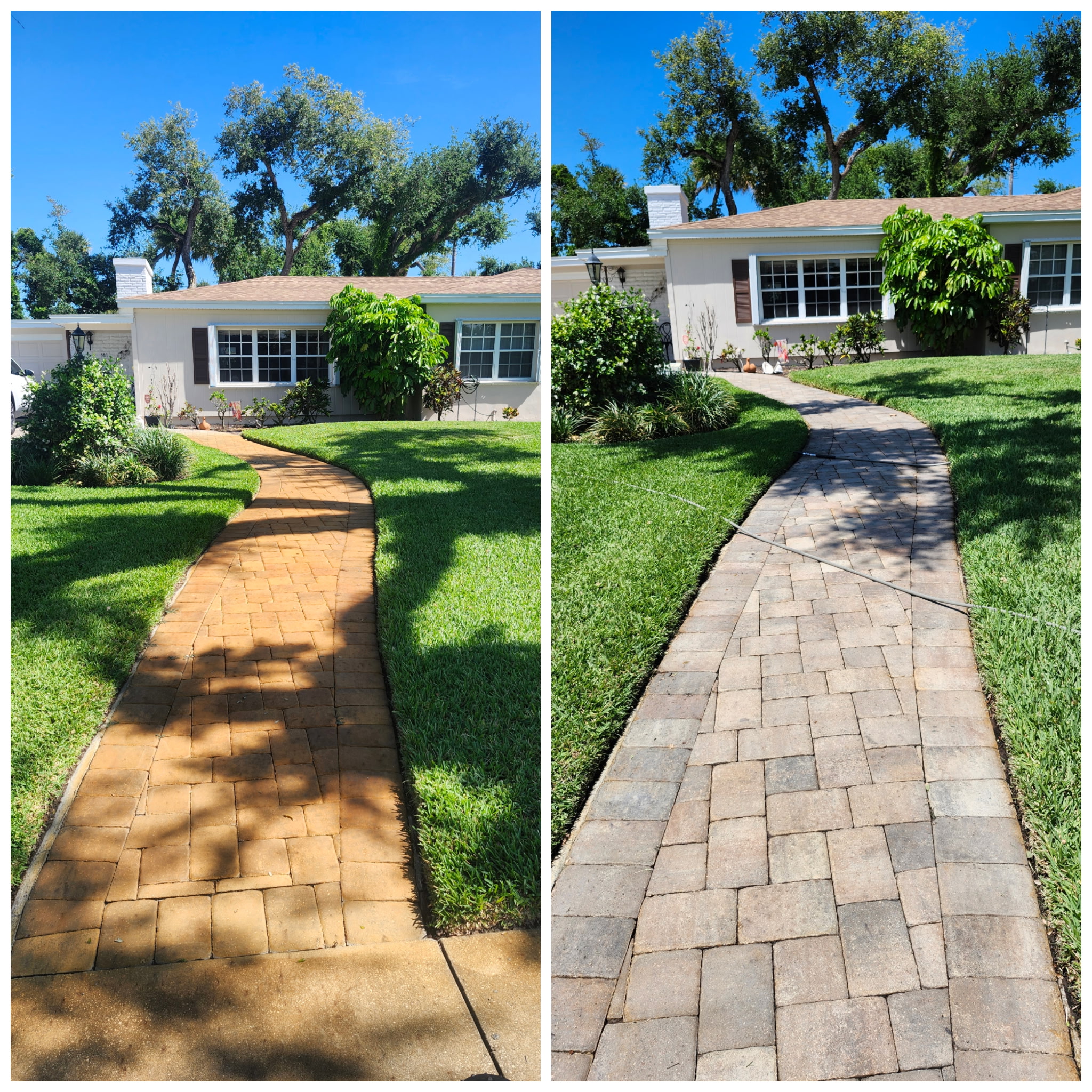
Sealing pavers after cleaning is worth it for most Florida homeowners, but not required. Sealing locks in joint sand, blocks weeds and ants, helps pavers resist algae and stains, and slows UV fade, all valuable on the Treasure Coast. The trade-offs are cost and periodic resealing. If you want lower maintenance and longer-lasting color, seal; if you prefer the raw look and minimal upkeep, you can skip it.
What does sealing actually do?
A paver sealer soaks into and coats the pavers and joints, delivering several benefits at once:
- Stabilizes joint sand so pavers do not shift and weeds cannot root.
- Repels stains, oil, rust, and food spills bead rather than soak in.
- Resists algae and mildew, which our humidity grows quickly.
- Enhances or preserves color and slows UV fade.
- Makes future cleaning easier, since grime sits on top.
Why does the Florida climate matter?
Our conditions make sealing more valuable than in milder states. Constant humidity feeds algae in unsealed joints, frequent rain washes out joint sand, and intense UV fades exposed pavers. Near the coast, salt adds another stressor. Sealing addresses all of these, which is why we recommend it for many driveways after a thorough paver cleaning.
Are there downsides to sealing?
A few, worth weighing honestly:
- Cost. Sealing adds to the cleaning bill and must be redone every 2 to 4 years in Florida sun.
- Slipperiness. High-gloss wet-look sealers can be slick when wet unless an anti-slip additive is used, important around pool decks.
- Trapped moisture. Sealing pavers that are not fully clean and dry can trap algae or cause haze, so prep is everything.
Never seal dirty or damp pavers. Sealing locks in whatever is underneath, so a proper clean and full dry-out come first, always.
When should you seal after cleaning?
Timing matters. Pavers must be completely dry, usually 24 to 48 hours after cleaning, and new pavers should cure 60 to 90 days before their first seal. Choose a dry stretch of weather, not easy during our rainy summers, which is why fall through spring is often ideal for sealing on the Treasure Coast.
Who should skip sealing?
If your pavers are shaded, rarely stained, and you do not mind a bit more weeding, you can maintain them with periodic cleaning alone. Some homeowners simply prefer the natural, matte look of unsealed pavers. There is no wrong answer; it comes down to how much maintenance you want to trade for how much protection.
For a deeper look at finishes and pricing, see our guide to paver cleaning and sealing, or ask us for an honest assessment of your specific driveway.
Wet-look or natural finish?
If you do decide to seal, the finish is the next choice. A wet-look, high-gloss sealer deepens the paver color dramatically and gives a rich, freshly wet appearance, which many homeowners love, but it shows wear and can be slippery unless an anti-slip additive is mixed in. A natural or matte sealer protects just as well while leaving the pavers looking essentially unchanged. Around pool decks and shaded walkways, the matte, anti-slip route is usually the safer pick; for a showpiece front driveway, the wet look has real curb appeal.
How does sealing affect resale and HOA compliance?
Clean, sealed pavers read as well-maintained, which helps at resale and keeps you on the right side of the appearance rules many Treasure Coast HOAs enforce. Sealed driveways resist the algae and weed growth that trigger HOA notices, so you spend less time reacting to compliance letters. That said, sealing is a preference, not a requirement, and a good contractor will tell you honestly if your particular driveway, say a shaded one that rarely stains, would not gain much from it.
How long does a seal last, and when do you redo it?
In Florida's intense sun and rain, a quality paver seal typically lasts 2 to 4 years, with sunny, high-traffic driveways on the shorter end and shaded areas longer. You will know it is time to reseal when water stops beading on the surface and the color begins to look dull or thirsty. Resealing is quicker and cheaper than the first job because the heavy cleaning and re-sanding prep is already done, so keeping up with it protects your original investment at a fraction of the initial cost.
Not sure whether to seal? Call MainSail Pressure Washing at (772) 559-2666 for a free estimate and a straight recommendation. We will clean your pavers properly first and only suggest sealing if it genuinely benefits your driveway.