Clean pavers, then lock the joints. That's the whole secret. Most paver problems — weeds, ants, wobbly stones, that dingy gray film — come down to what's happening in the sand between the pavers, not the pavers themselves. Here's how the pros do it.
Step 1: Clean the surface the right way
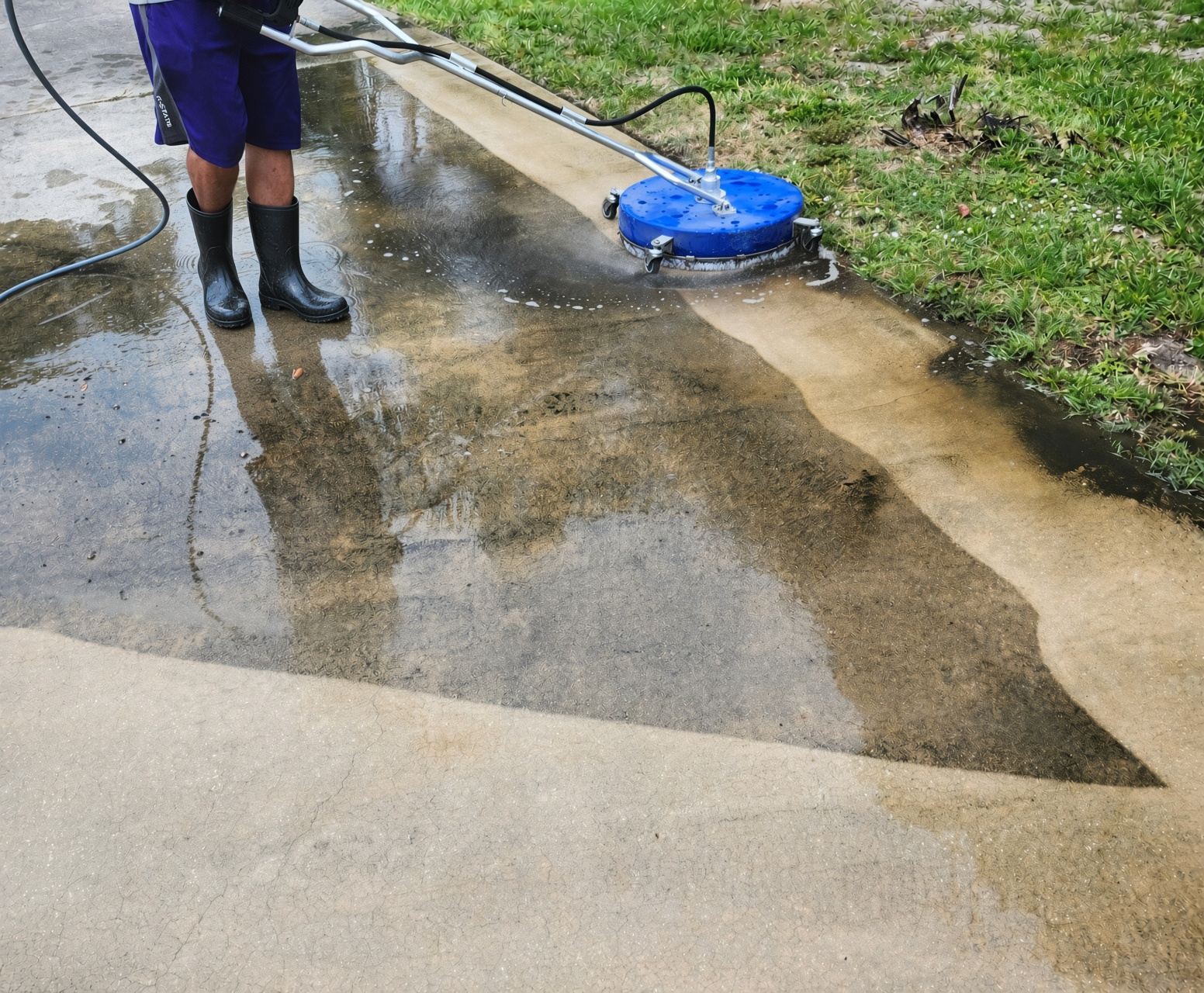
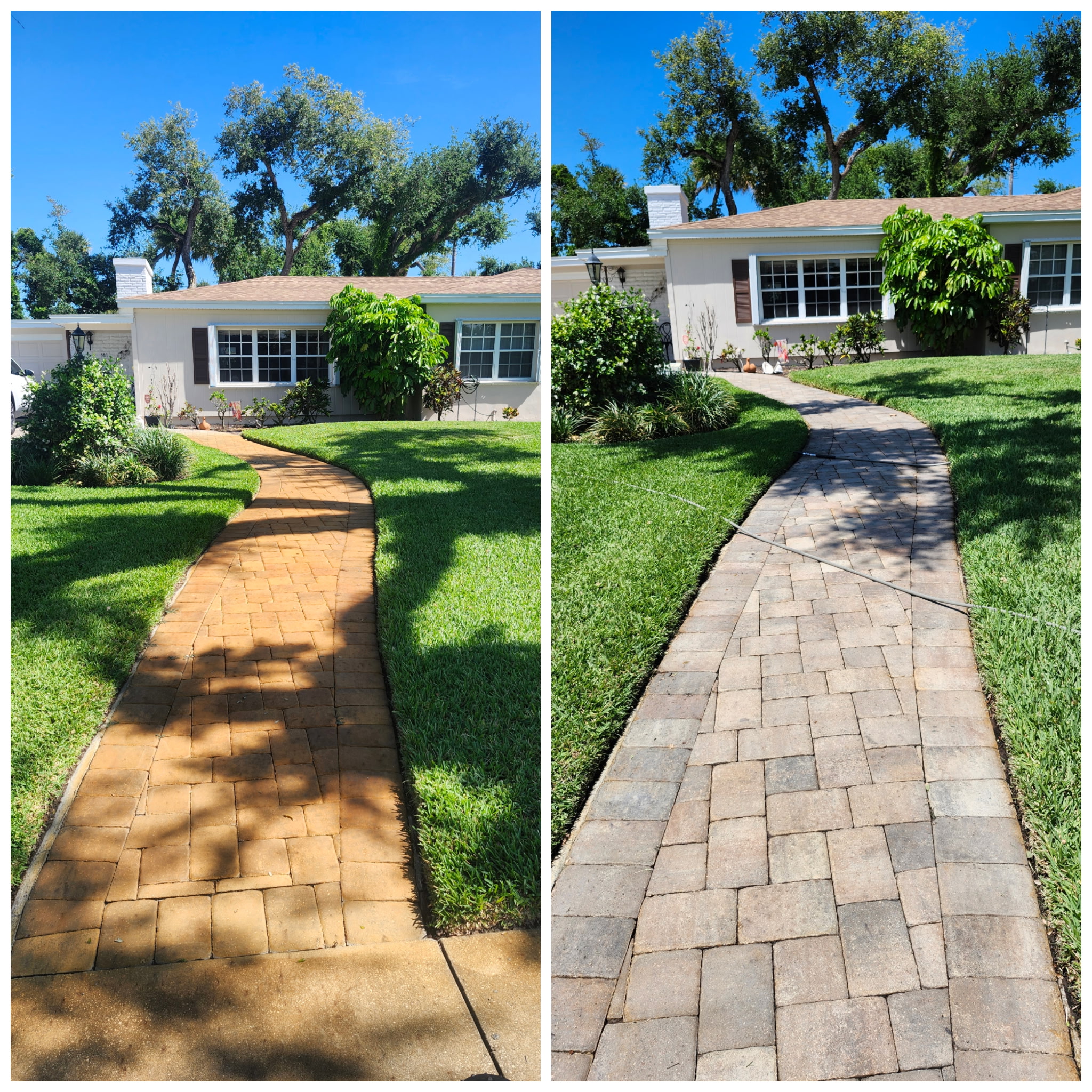
Brick and concrete pavers can take more pressure than a roof, but too much still blasts the joint sand out and can pit the surface. A surface cleaner attachment gives an even, streak-free result without gouging. For organic buildup (that green-black film), a cleaning solution does more than raw pressure — it kills the algae so it doesn't grow back in a month.
Step 2: Re-sand the joints
Once the pavers dry, the joints need fresh sand. Polymeric sand is the upgrade worth paying for: you sweep it into the joints, mist it, and it hardens into a flexible bond that locks the pavers together. That hardened joint is what actually stops weeds from sprouting and ants from tunneling — not the cleaning itself.
Step 3: Consider sealing
Sealing is optional but popular in Florida. It deepens the color (a 'wet look' or a natural matte), makes future cleaning easier, and helps the joint sand last longer. In our sun and rain, most sealers need refreshing every 2–3 years. If you want weeds gone for good and a showroom finish, clean + polymeric sand + seal is the combination.
Why weeds keep coming back
If you've cleaned your pavers and the weeds returned within weeks, the joints were left open. Weed seeds blow in, land in the empty joints, and sprout. Pulling or spraying them is a losing battle until you refill and lock the joints. Do that once and the problem largely disappears.
Want your pavers cleaned, re-sanded, and sealed the right way? We handle patios, walkways, and pool decks across the Treasure Coast. Get a free estimate or call (772) 559-2666.