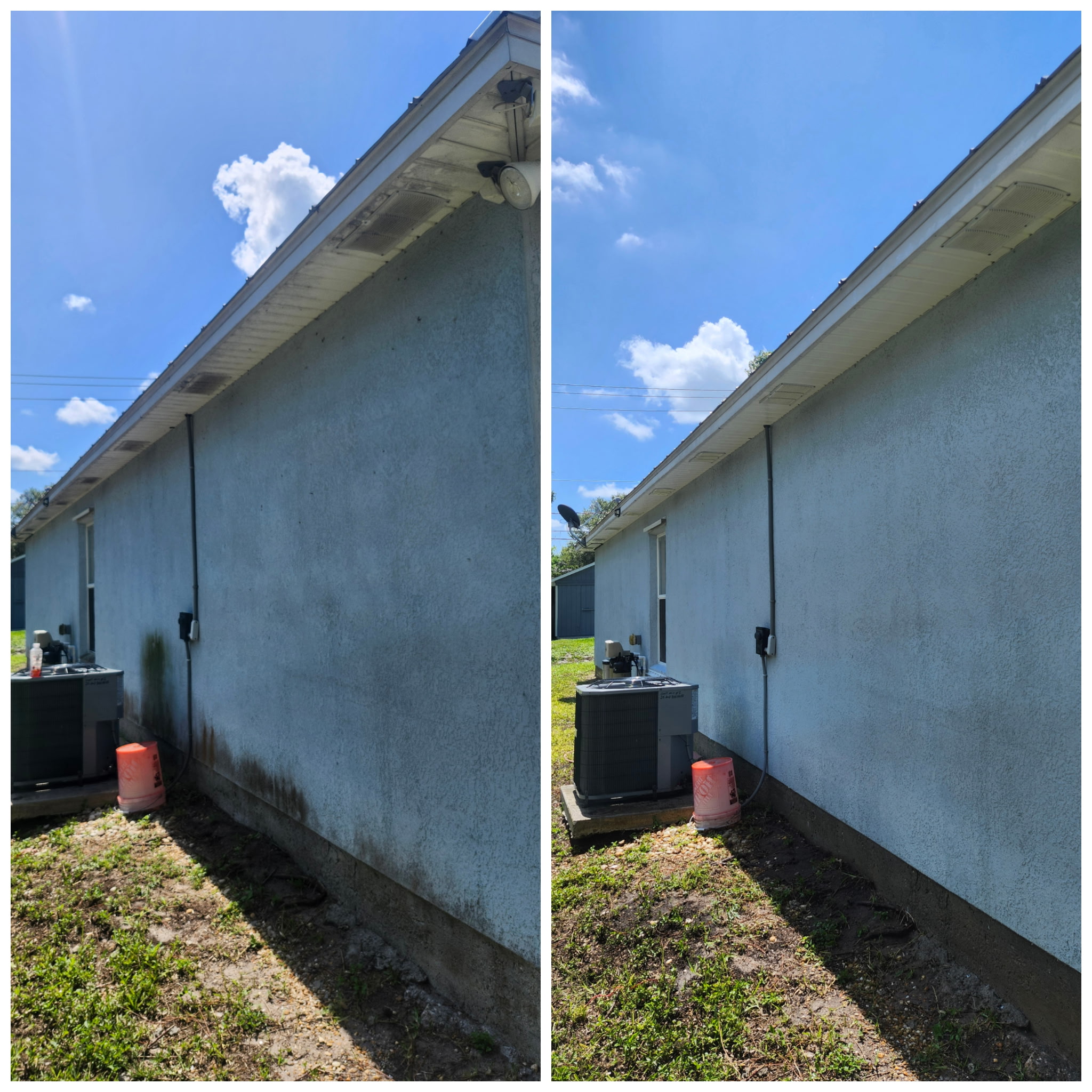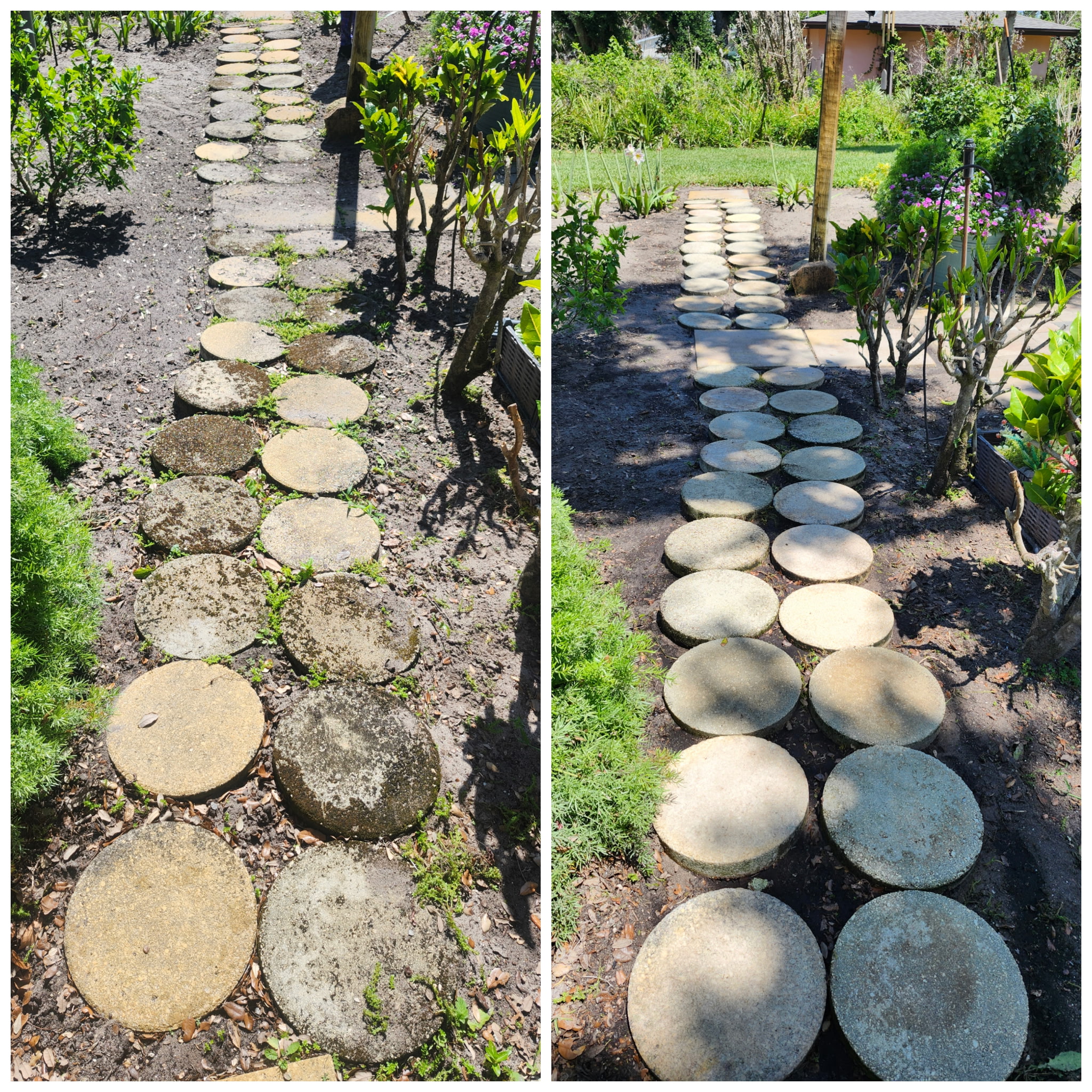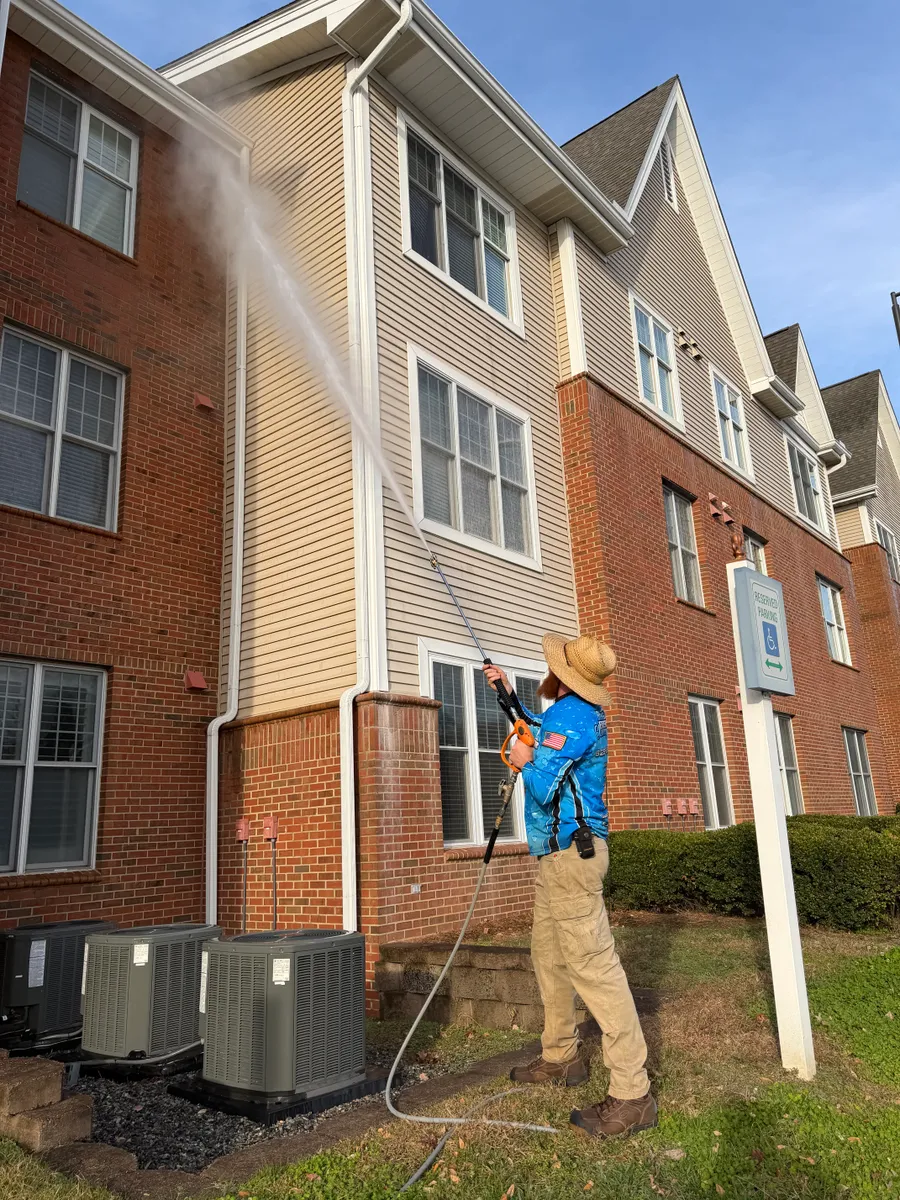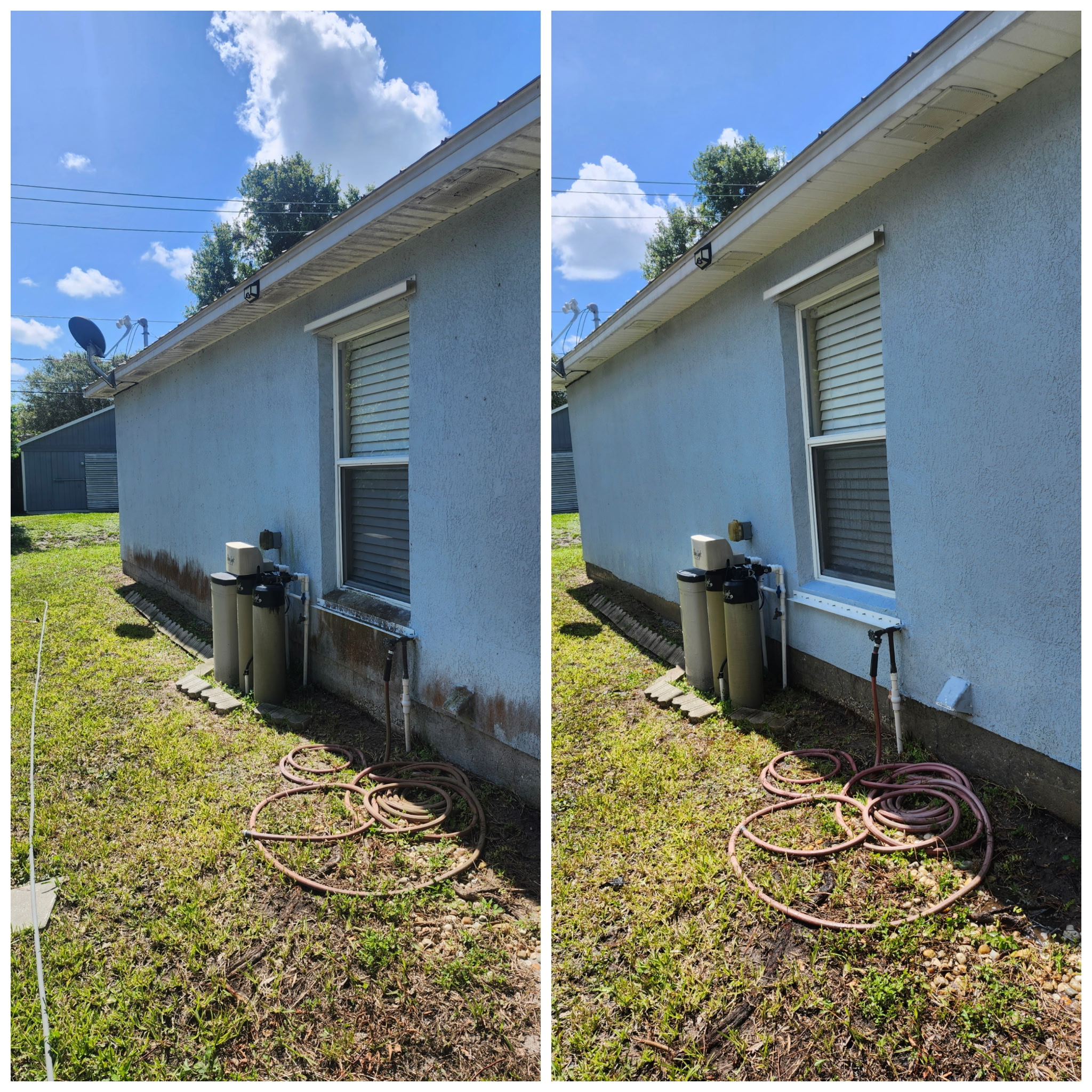
The simple rule: soft washing uses low pressure plus specialized cleaning solutions for delicate surfaces like roofs, siding, and screens, while pressure washing uses high-pressure water for hard, durable surfaces like concrete and pavers. Using the wrong method is the number-one cause of homeowner damage, so matching the method to the surface matters more than the machine.
What is the actual difference?
Pressure washing relies on force, often 2,000 to 4,000 PSI, to physically blast away dirt. Soft washing drops the pressure to roughly garden-hose levels and lets a cleaning solution do the work, killing algae, mildew, and bacteria at the root. Soft washing cleans and disinfects; pressure washing scours.
Which surfaces need soft washing?
Anything that can be gouged, stripped, or driven full of water should be soft washed:
- Roofs (shingle and tile) — high pressure strips granules and lifts tiles. Always use soft wash roof cleaning.
- Stucco and painted siding — pressure cracks stucco and forces water behind the wall.
- Screen enclosures and pool cages — screens tear instantly under pressure.
- Wood, soffits, and lanais — soft washing protects the finish.
Which surfaces can take pressure washing?
Hard, non-porous, structurally solid surfaces handle pressure well when done by someone who knows the right tip and distance:
- Concrete driveways and sidewalks
- Brick and concrete pavers (with care to avoid blowing out joint sand)
- Pool decks and patios
Even here, pros often combine methods, pre-treating concrete with a cleaner and finishing with a surface cleaner for even results. See how we approach driveway and concrete cleaning.
Why does this matter more in Florida?
Our heat, humidity, and salt air feed Gloeocapsa magma algae, the black streaks on roofs and green film on north walls. Blasting that growth with pressure only removes the surface layer; the organism regrows in weeks. Soft washing kills it, so results last far longer, which is why nearly every home exterior on the Treasure Coast should be soft washed, not pressure blasted.
If a company offers to pressure wash your roof or stucco, that is a red flag. The pressure is what causes damage, not the dirt.
How do you choose?
Ask one question: is the surface hard and durable, or delicate and porous? Concrete and pavers, pressure wash. Roof, siding, screens, and wood, soft wash. When in doubt, a professional can tell in seconds and carries both capabilities on the same truck. Our team evaluates each surface and switches methods as needed, sometimes on a single property.
Do professionals use both methods?
Yes, and that is the point. A well-equipped crew carries the gear for both soft washing and pressure washing and switches between them across a single property. Your roof and stucco get a low-pressure soft wash, while your concrete driveway gets a high-pressure surface clean. Even on concrete, pros often pre-treat with a cleaning solution first, so less pressure is needed and the result is more even. The skill is knowing which surface gets which treatment, not owning one machine and using it everywhere.
What are the risks of using the wrong method?
Choosing wrong is expensive. Pressure washing a delicate surface causes damage that often costs more than the cleaning ever saved:
- Roofs: lost granules, lifted tiles, voided warranty.
- Stucco: cracks and pockmarks that trap more dirt.
- Wood: splintering and gouging of the grain.
- Screens: torn mesh and blown-out spline.
Soft washing a hard, greasy driveway has the opposite problem, it may not fully lift heavy stains without the mechanical action of pressure. Matching method to surface gets the best result with the least risk.
Is soft washing better for the environment?
Soft-wash solutions are applied in controlled amounts and are biodegradable, and because they kill growth at the root, you clean less often, which means less water and product over time. A high-pressure approach uses far more water and, since growth returns quickly, more frequent cleanings. Pros also pre-wet and rinse landscaping to dilute any runoff. When done correctly, soft washing is both gentler on your home and lighter on your yard and water use than repeated pressure blasting that never solves the underlying problem.
Not sure which your home needs? Call MainSail Pressure Washing at (772) 559-2666 for a free estimate. We will inspect your surfaces, recommend the right method for each, and never use high pressure where it could do harm. Reach out through our contact page anytime, seven days a week.