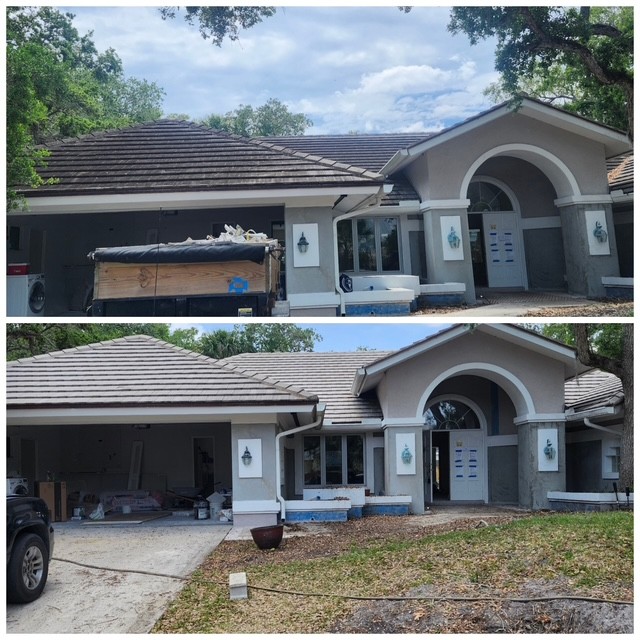
Your roof is turning black because of Gloeocapsa magma, a hardy blue-green algae that thrives in Florida's heat and humidity. Those dark streaks are living colonies feeding on the limestone filler in your shingles. It is not dirt or soot, and it will not rinse off with rain; it spreads and worsens until the roof is treated with a soft wash.
What are the black streaks, exactly?
The algae travels by airborne spores and lands on roofs, where it feeds on moisture and the calcium carbonate (limestone) used as filler in asphalt shingles. As colonies grow, they develop a dark, UV-protective sheath, which is the black you see. It typically shows first on north-facing and shaded slopes where moisture lingers longest.
Is roof algae just cosmetic?
No. Left alone, the growth causes real harm:
- Heat absorption. Black algae makes the roof absorb more heat, raising attic temperatures and cooling bills.
- Moisture retention. The colonies hold dampness against the shingles, accelerating wear.
- Shingle breakdown. As algae eats the limestone filler, granules loosen and shingle life shortens.
- Lichen and moss often follow, and lichen roots into the shingle, causing pitting.
Addressing it early with professional roof soft washing protects the roof you paid a lot for.
Why is it so bad in Florida?
The Treasure Coast is close to ideal for this algae: high humidity, frequent rain, warm temperatures year-round, and salt air near the coast. Homes in Vero Beach and Sebastian with tree cover or ocean-side shade see growth return faster than inland, sunny roofs. That is why northern-state advice about roof cleaning rarely matches what our roofs actually need.
How do you get rid of it, and keep it gone?
The only safe, effective method is soft washing. A low-pressure cleaning solution kills the algae at the root, and the dead growth washes away over the following days. Never pressure wash a roof; the force strips granules and can void your warranty. Prevention helps too:
- Trim overhanging branches to let more sun dry the roof.
- Keep gutters clear so water drains and does not back up onto shingles.
- Schedule periodic soft washing, every 2 to 4 years for most Treasure Coast roofs.
- Zinc or copper strips at the ridge can slow regrowth, though soft washing is the reliable fix.
If your neighbor's roof looks clean and yours is streaked, it is almost never the roof's age; it is untreated algae that a soft wash can reverse.
Can the stains come back?
Yes, because spores are always in the air here, but a proper soft wash that kills the colony buys years before regrowth, versus weeks for a surface rinse. A light maintenance treatment keeps a roof consistently clean and extends its life.
Why does the algae start on the north side?
If you have noticed the streaks appear worst on one slope, there is a reason. North-facing and shaded sections of the roof receive the least direct sun, so they stay damp longer after rain and dew. That lingering moisture is exactly what Gloeocapsa magma needs to establish and spread. South and west slopes dry faster in the Florida sun and often stay cleaner longer. Overhanging trees make it worse by adding shade and dropping organic debris the algae feeds on, which is why trimming branches back genuinely slows regrowth.
Does a black roof cost you money?
Beyond curb appeal, the growth has a real price:
- Higher cooling bills, the dark colonies absorb heat and drive up attic temperatures.
- Shorter roof life, as algae consumes shingle filler and loosens granules.
- Lower home value and HOA fines, a streaked roof reads as neglected to buyers and boards alike.
Treating the roof on a schedule is far cheaper than the cooling waste and premature replacement that neglect invites.
Can you prevent the streaks from returning?
You cannot stop spores from landing, since they are always in Florida's air, but you can slow regrowth significantly. Trimming overhanging branches lets more sun dry the roof, keeping gutters clear prevents the roof edge from staying wet, and installing zinc or copper strips near the ridge releases trace metals that inhibit algae with each rain. The most reliable prevention, though, is a periodic soft wash that resets the roof before growth entrenches. Together these keep a Treasure Coast roof looking clean for years at a time.
Seeing black streaks creep across your roof? Call MainSail Pressure Washing at (772) 559-2666 for a free roof inspection and estimate. We soft wash only, protecting your shingles, your warranty, and your landscaping.